 Photo Courtesy of Paul Burkholder |
|
Photo Courtesy of Paul Burkholder |
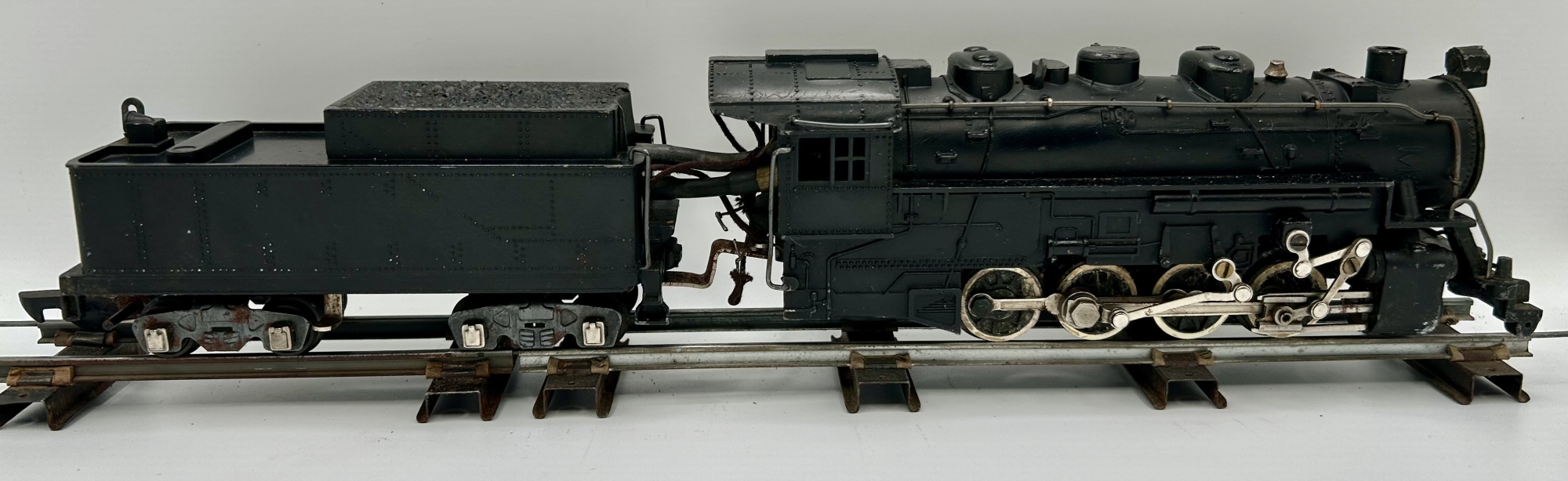
This item is an example of an early engineering sample dating from 1945. It is one of the rarest of the rare. While Gilbert produced 6 steam locomotives in 1941, only 5 of those were brought over to the American Flyer S gauge line in 1946, at least in their catalogs. The Streamline Royal Blue Pacific was omitted. They only offered general production models of their Atlantic (300), their K5 Pacific (31x series), and their Hudson (32x series) in 1946. The 0-8-0 Switcher and 4-8-4 Northerns didn't make it into the production line until 1947. Any examples we have of these locomotives from 1945 and 1946, are these engineering samples and what production was necessary to display the locomotives at the Hall of Science in New York and at the trade shows, like the Toy Fair held in New York City every year.
While toy sales ceased during World War II, Gilbert engineers kept busy with their re-engineering of the American Flyer 3/16 scale train line from O gauge to what eventually came to be called S gauge. It is believed that the decision to go into S gauge was made around 1939, when the 3/16 scale Hudson and Northern were introduced to the O gauge line, though the gauge wasn't officially recognized and named by the NMRA until 1943. Re-engineering the train line was a work in progress resulting in many different sample locomotives of all 5 planned models, each with slight variations. There were many changes necessary to make the switch to S gauge. One interesting side note to the production of the first S gauge 0-8-0's is that the coal pile frame on the top of the tender had to be widened to accommodate the width of the smoke unit, thus requiring a new casting. The exact number of 0-8-0 Switchers and 4-8-4 Northerns that were among these early models is probably uncertain. Some have said 12 of each and others 25 of each. We will probably never know for sure. Needless to say, the small number of models produced explains why they sell for astronomically high prices when they are found. Among these, the rarest are those models that exhibited variations that never made it to the production locomotives. This includes early engineering samples of not only the rare 0-8-0 Switcher and 4-8-4 Northern, but also the samples of models that did make it to production in 1946, such as the Hudson. One particular Hudson with the same front fill smoke unit and unusual lettering is shown in a photo in the Advertising Transparency section. (last photos in Slide show)
Here are some of the features found in these early samples.
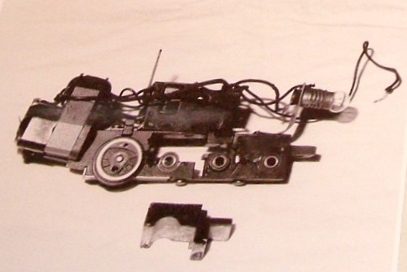
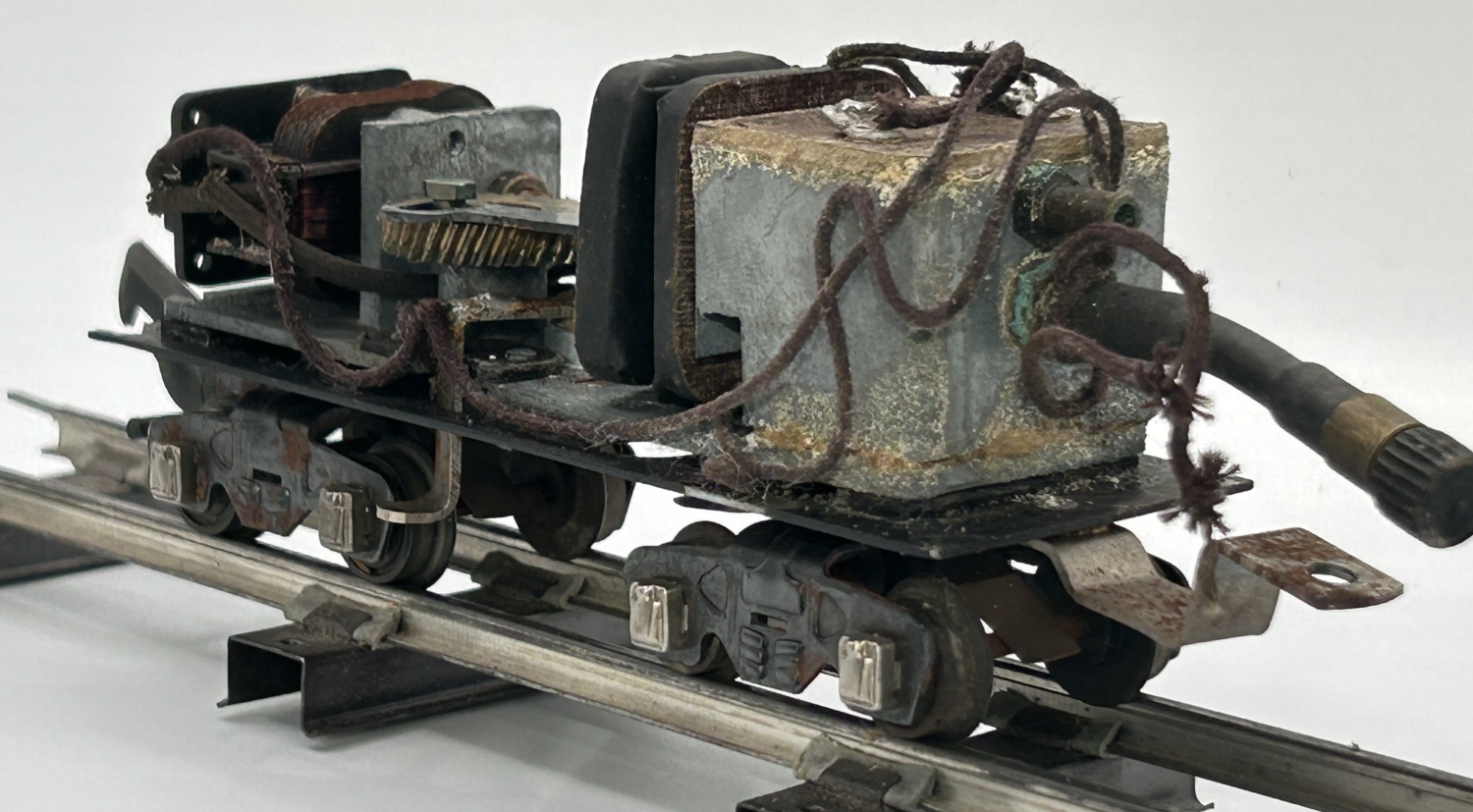 Smoke Unit with Front Fill TubeProbably the most striking variation in this particular locomotive is it's smoke unit. It had the fill tube on the front of the unit, just under the fitting that sent the smoke through the tube to the smoke stack. It consisted of a short rubber tube with a cap fitting that could be moved out to enable refilling of the smoke unit, rather than the filler tube extending through the coal pile in the tender that appeared on production units. The absence of the hole in the tender coal pile might be more esthetically pleasing, but these units were most likely a nuisance to fill. This smoke unit fills in a way similar to the Erector Smoke Unit that was later offered in 1950 for use in Erector set models. (Photo Courtesy of Paul Burkholder) |
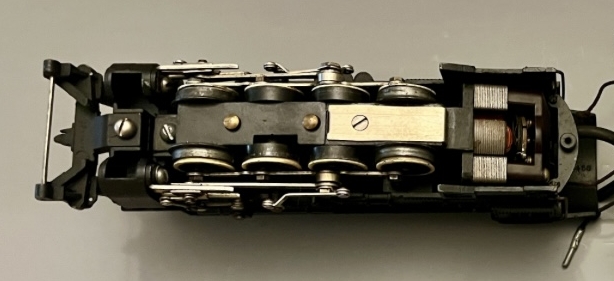
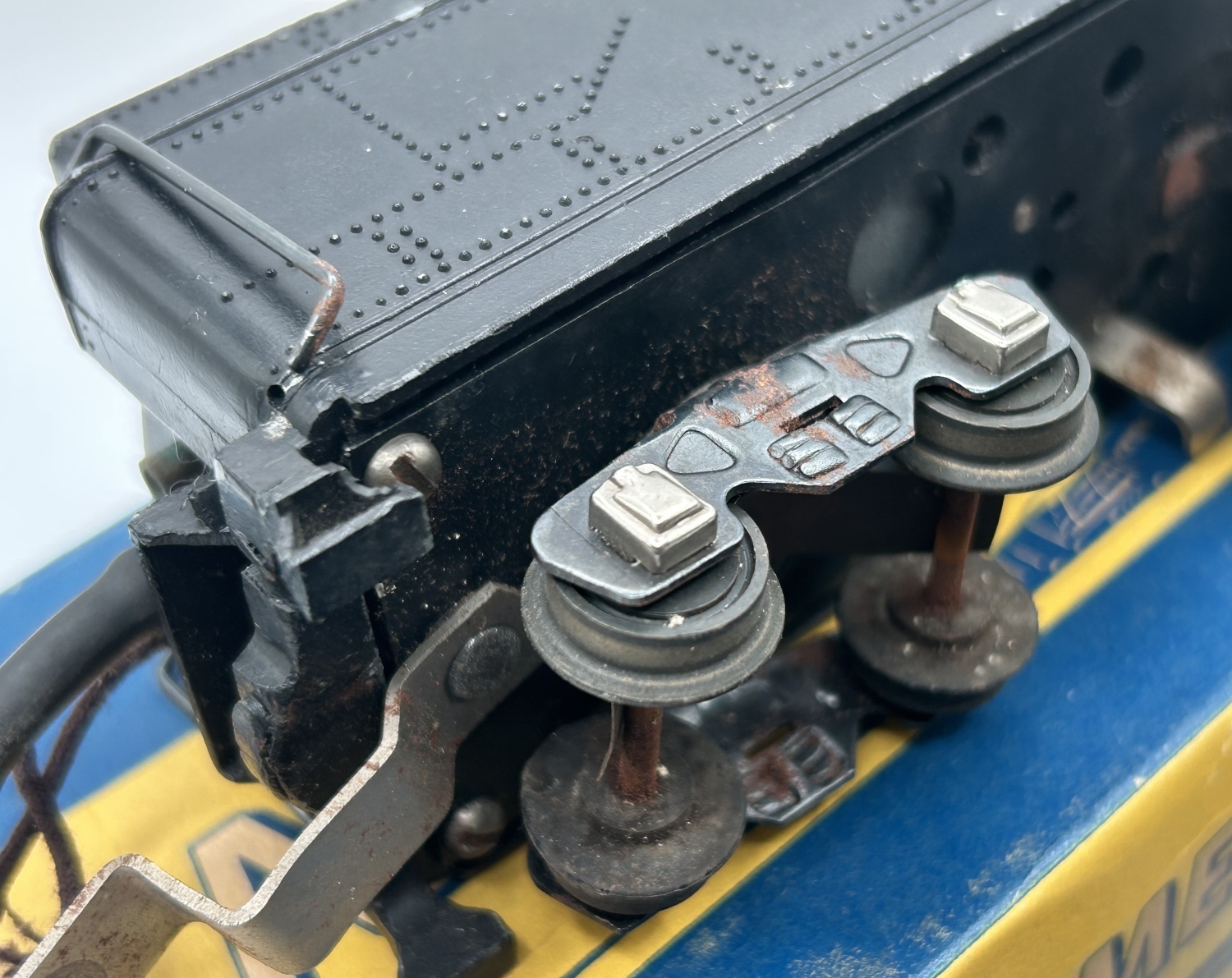 Scale WheelsAnother feature present on this locomotive is scale wheels. Flyer drive wheels have always been scale flanged, or close to it, but from the production models of 1946 on, rolling stock, and the other wheels on locomotives have had deeper flanges for better operation. This is an example of Gilbert's devotion to scale realism. Only after these scale flanges proved troublesome did they go to larger flanges. The problem was that the light weight cars with these flanges tended to derail, particularly when going over the 695 track trip designed to be activated by the brass buttons these early engines had. Examples of these cars can be seen here. (link to new page for scale flange cars) (Photo Courtesy of Paul Burkholder)
|
|
|
Variations in LetteringOne of the variations found in the earliest engineering samples is the absence of lettering or lettering that differs from that which eventually appeared on the regular production locomotives and the later 1946 0-8-0 Switchers and 4-8-4 Northerns made for display use. This 0-8-0 locomotive is unlettered, but other similar samples have been found with lettering. |
Thanks to Gary Baloun and Lonny Beno who helped greatly in the production of this page
All Photos Below Courtesy of Paul Burkholder
Click on the photos to view enlarged images
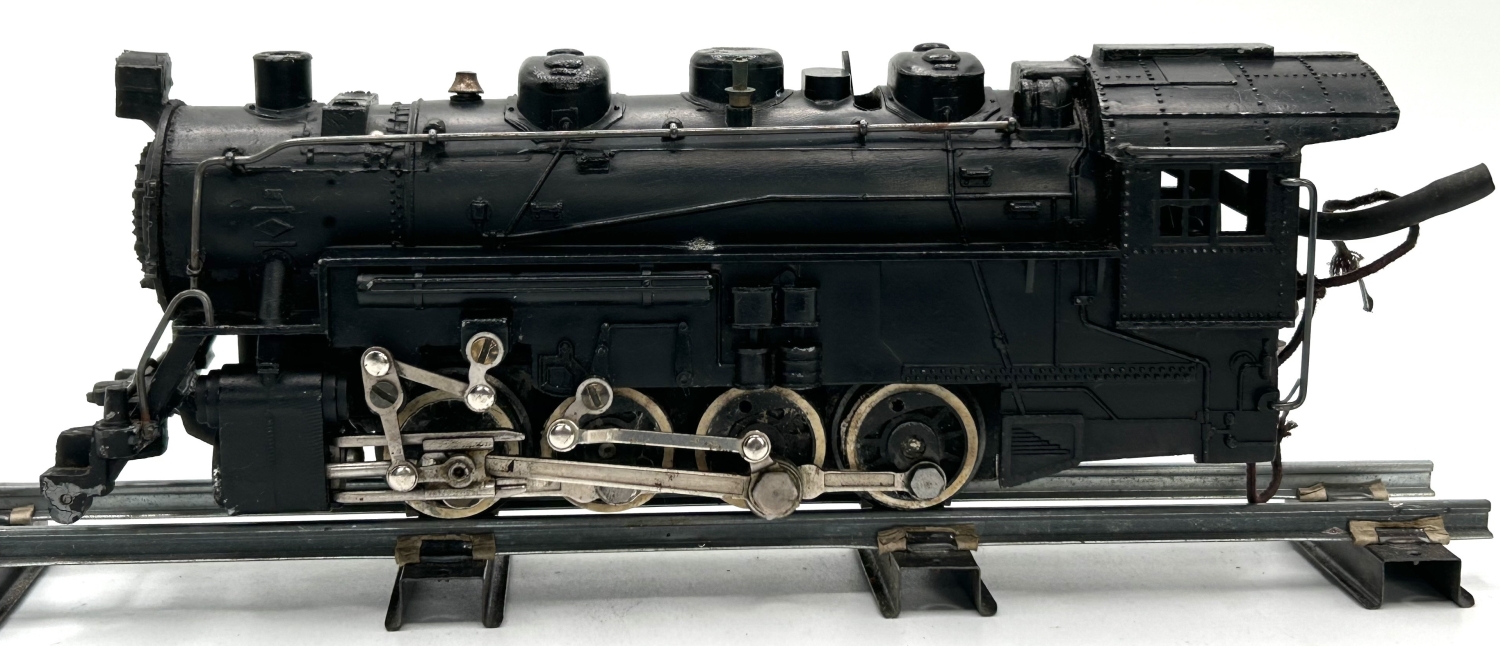 Locomotive side view |
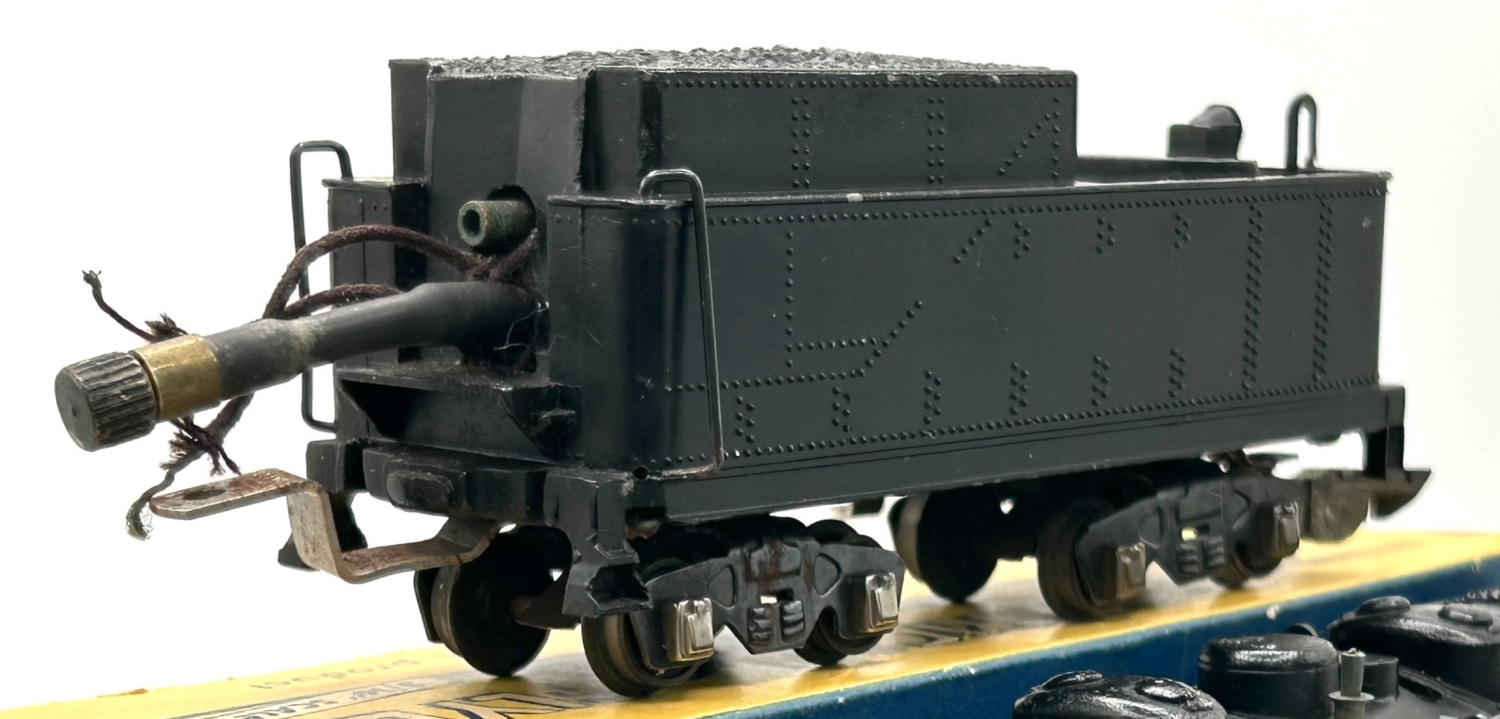 Tender side view showing filler tube |
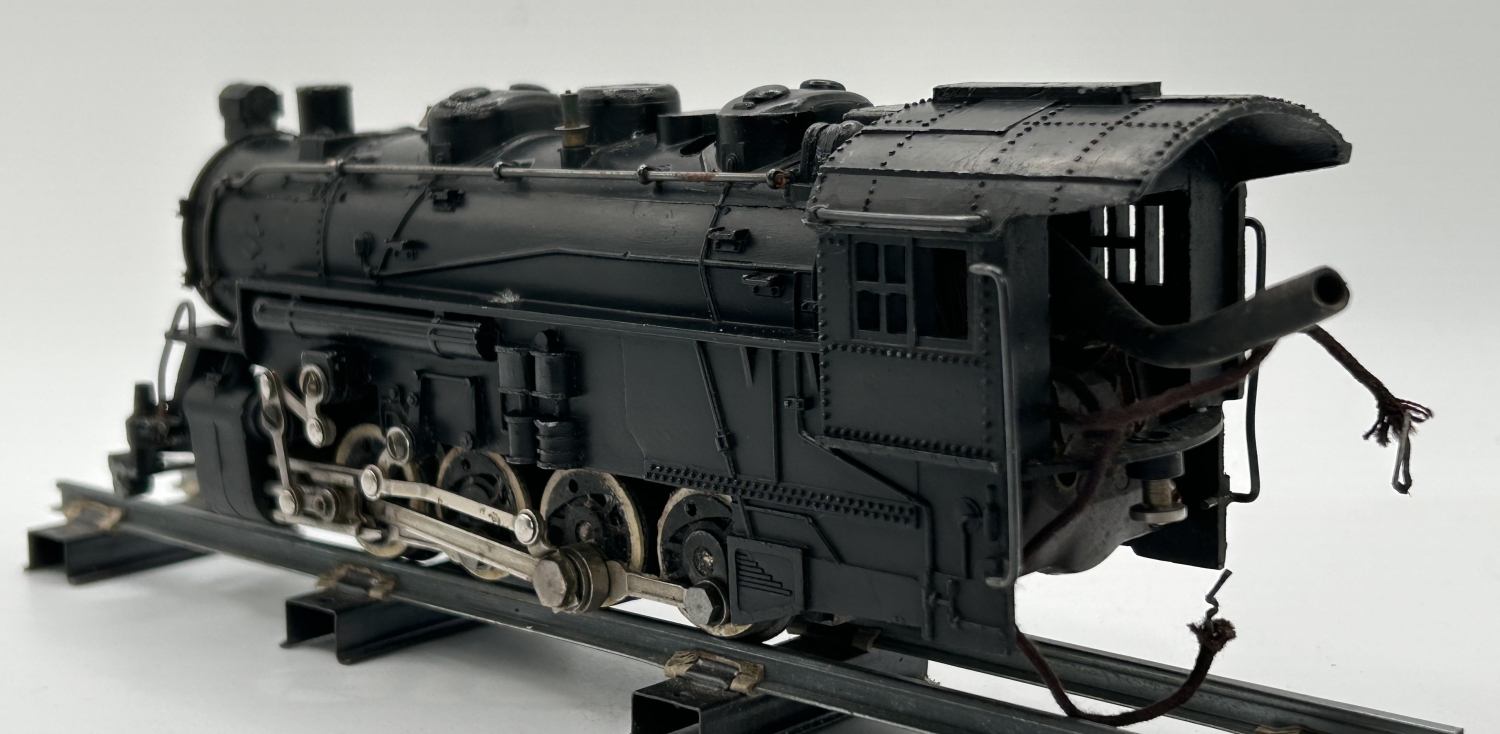 Locomotive rear view |
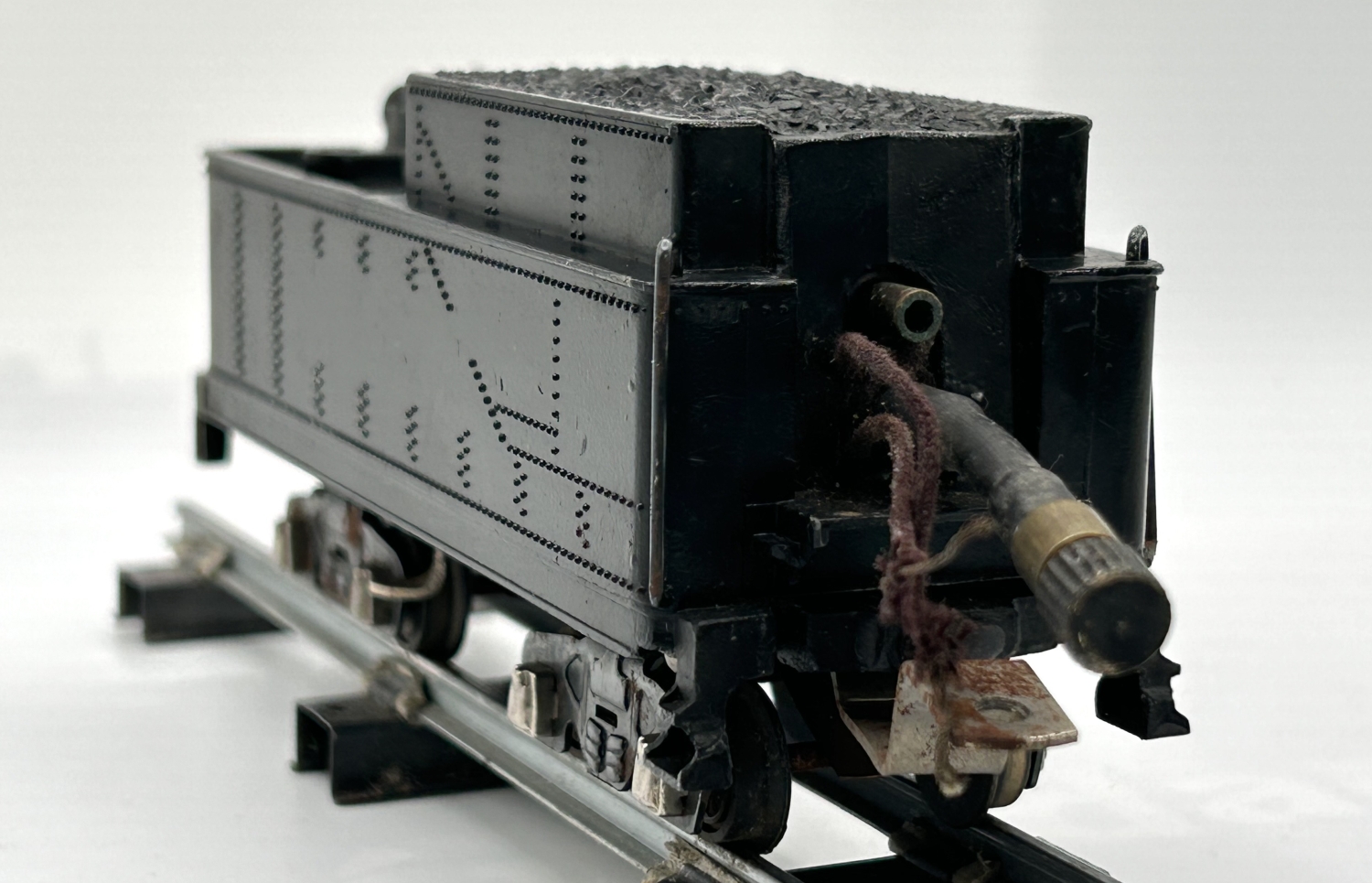 Tender front view showing filler tube |
Smoke unit with shell removed |
Scale flange on tender wheels |