 Engine tender photo here xxx |
|
Engine tender photo here xxx |
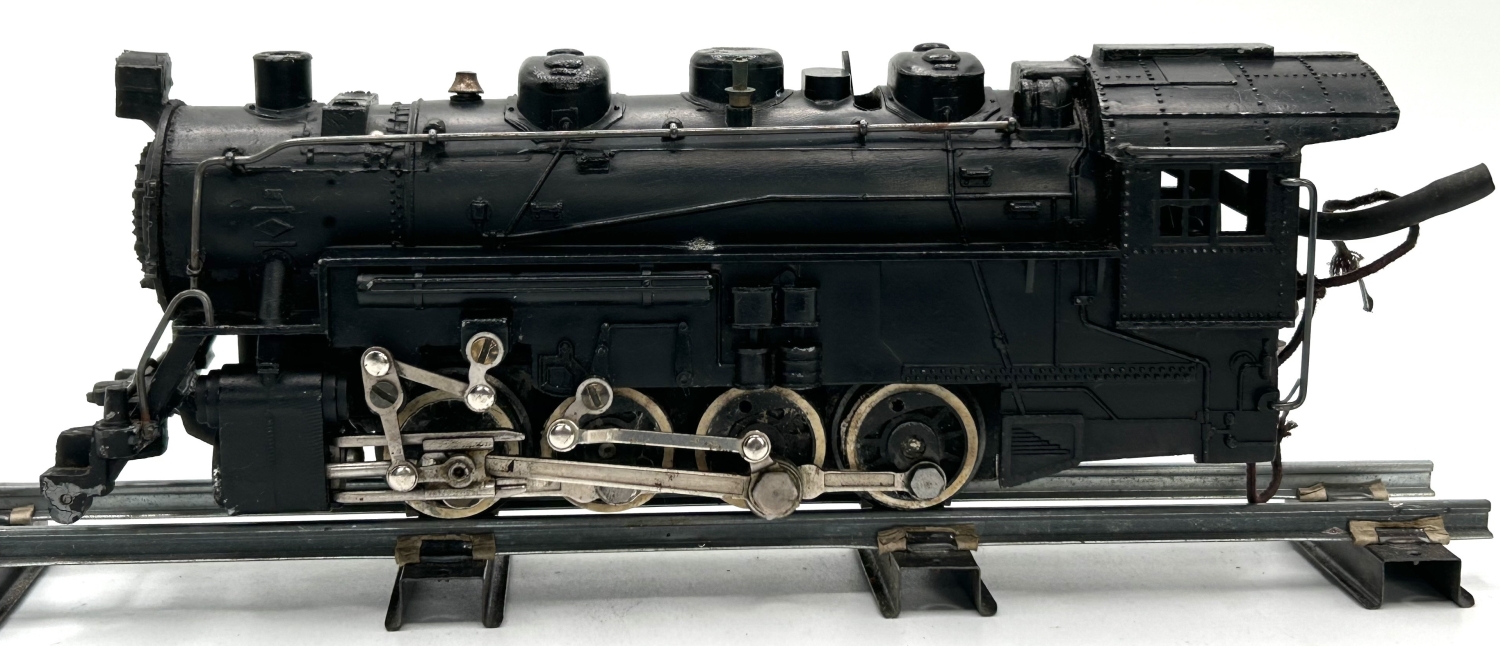
This item is a prototype of the 0-8-0 Switcher and is thought to date to 1945. It is one of the rarest of the rare. While Gilbert produced 6 steam locomotives in 1941, only 5 of those were brought over to the American Flyer S gauge line in 1946, at least in their catalogs. The Streamline Royal Blue Pacific was omitted. They only offered general production models of their Atlantic (300), their K5 Pacific (31x series), and their Hudson (32x series) in 1946. It is fairly well established that Gilbert produced no general production models of either the 0-8-0 Switcher or the 4-8-4 Northern in 1946. They did produce pre-production models of all 5 locomotive types, the Atlantic, K5 Pacific, Hudson, 0-8-0 Switcher, and Northern, thought to number around 25 of each. The fact that these pre-production 0-8-0's and Northerns are the only 1946 locomotives of those types, explains why they sell for astronomically high prices when they are found. Even more rare than these pre-production locomotives are the very few prototypes that were made during the last days of World War II, such as this one. Only two prototype 0-8-0's are known to exist, this one and one in another collection. A prototype Hudson also has been found in another collection. This particular Hudson is shown in a photo in the Advertising Transparency section. (last photos in Slide show)
The prototypes and the preproduction locos share many attributes in common, but there are other ways in which they differ and can be identified by those differences. One thing that these prototypes and pre-production items share in common is the presence of scale flanges on the tender and other wheels. Flyer drive wheels have always been scale flanged, or close to it, but from the production models of 1946 on, rolling stock, and the other wheels on locomotives have had deeper flanges for better operation. The rolling stock that accompanied the prototype and pre production engines also had the smaller flanges, which proved to be quite a problem as the cars frequently derailed, particularly when going over the 695 track trip designed to be activated by the brass buttons these early engines had. Examples of these cars are shown below.
Another commonality between these engines was the chassis on the Atlantic, 0-8-0, and the Northern. It was not a solid block, but had cutouts for the insertion of lead weights that were pressed in. This was the way the O gauge American Flyer versions of these locomotives were made and Gilbert was using as many of the O gauge parts as they could. This must have been an engineering nightmare resulting in a more complicated production process and less stable chassis. Finally, the prototype and pre-production 0-8-0's also had a slot in the side of the chassis. This was designed to accommodate the linkage needed for a ringing bell, something that had been planned in the pre-war line, but never produced. It was also never produced in the S gauge line until the 21234 Diesel Switcher was introduced in 1959.
The big difference between these prototypes and pre-production and production cars was the fill tube for the smoke unit. These prototypes had the fill tube on the front of the unit, just under the fitting that sent the smoke through the tube to the smoke stack. It consisted of a short rubber tube with a cap fitting that could be moved out to enable refilling of the smoke unit. The absence of a hole in the tender coal pile might be more esthetically pleasing, but these units were most likely a nuisance to fill. This smoke unit fills in a way similar to the Erector Smoke Unit that was later offered in 1950 for use in Erector set models.
One interesting side note to the production of the first S gauge 0-8-0's is that the coal pile frame on the top of the tender had to be widened to accommodate the width of the smoke unit, thus requiring a new casting.
| Comparison Chart - 1946 Locomotives | ||||
| Scale Wheels | Cutout Chassis (Atlantic, 0-8-0 and Northern only) |
Smoke Unit | Lettering | |
| Production Locomotives |
No | No | Top Fill | Railroad Name on tender Number on Cab |
| Pre-production Locomotives |
Yes | Yes | Top Fill | Railroad Name on tender Number on Cab |
| Prototype Locomotives |
Yes | Yes | Front Fill | No lettering or Railroad name on Tender in different position or different size than production locomotives. No number on cab |
Thanks to Lonny Beno who helped greatly n the production of this page
All Photos Below Courtesy of Paul Burkholder
Click on the photos to view enlarged images
| Locomotive side view |
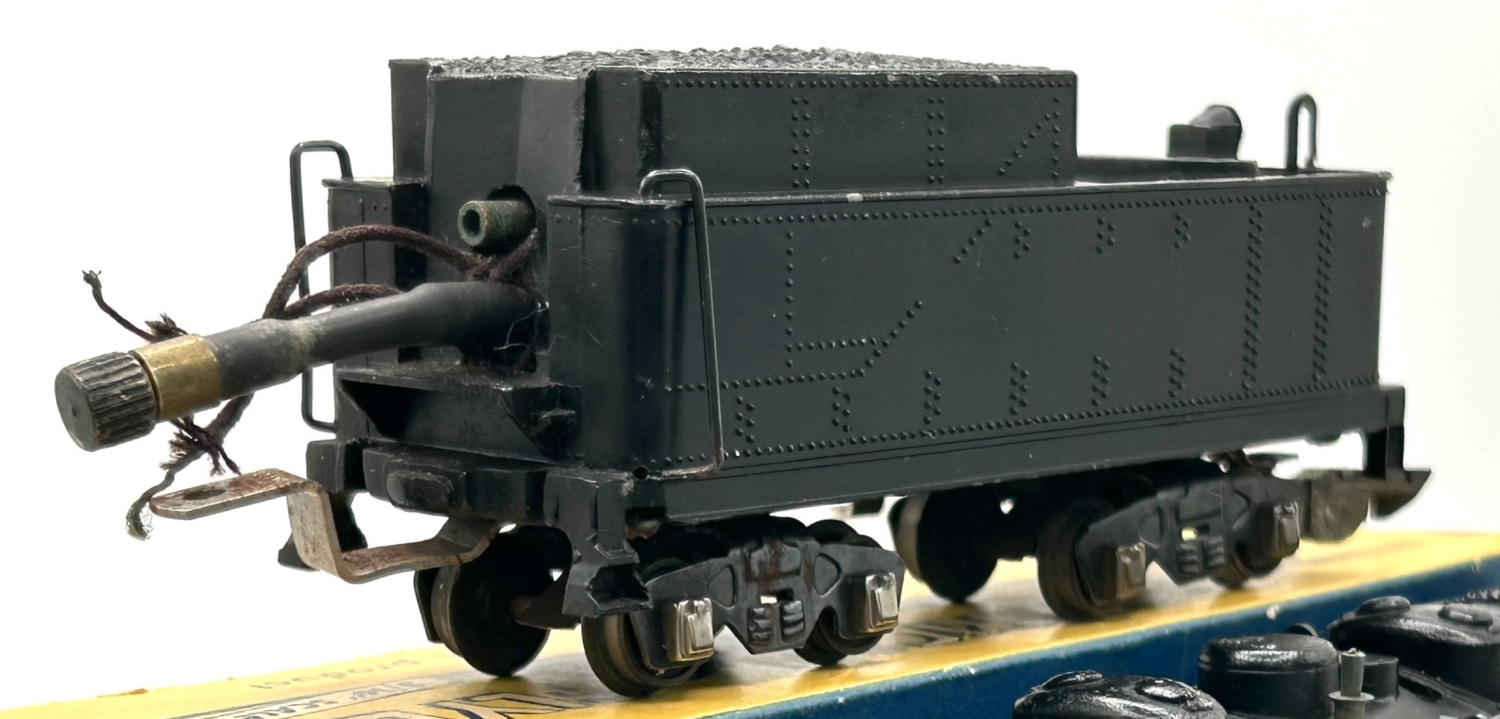 Tender side view showing filler tube |
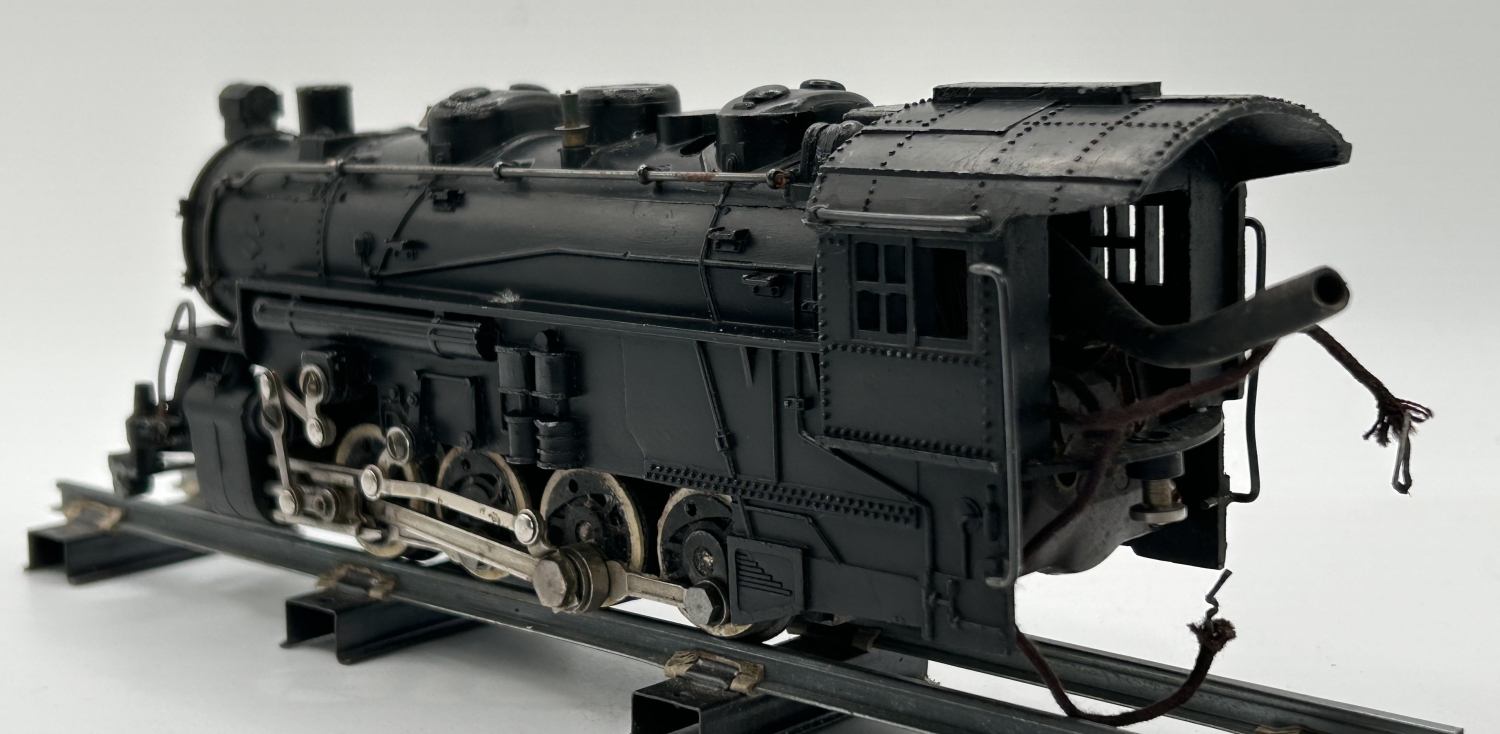 Locomotive rear view |
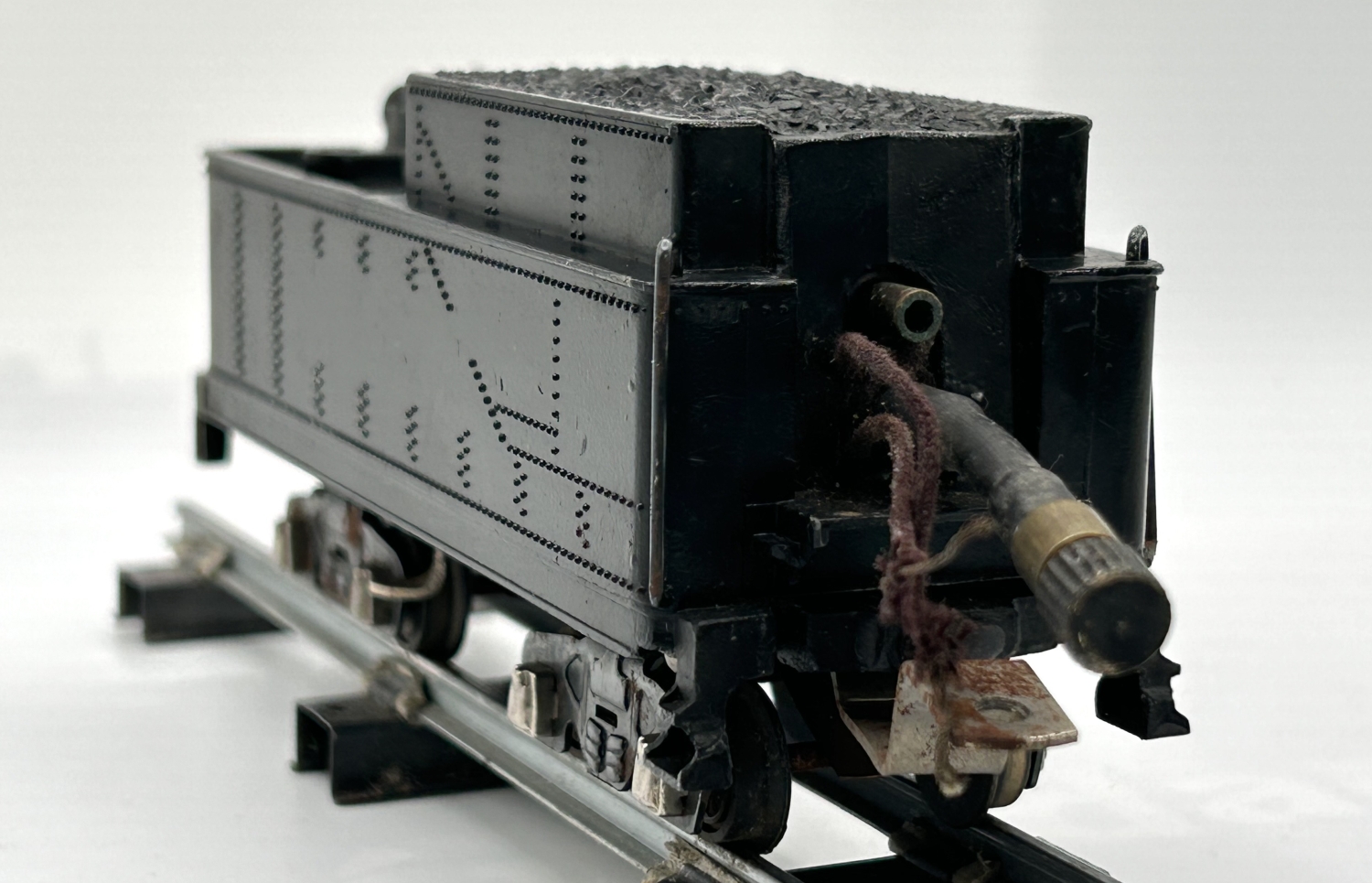 Tender front view showing filler tube |
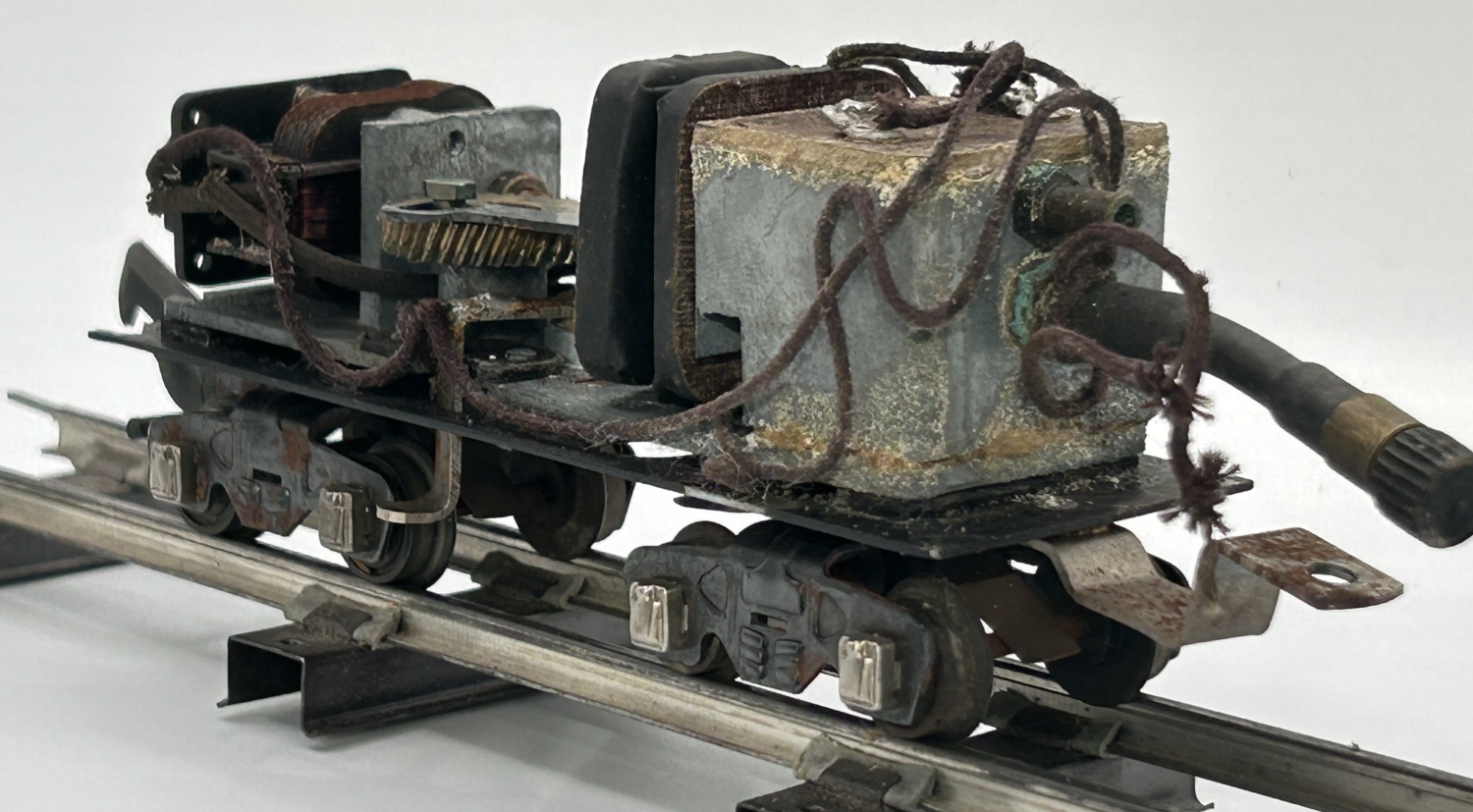 Smoke unit with shell removed |
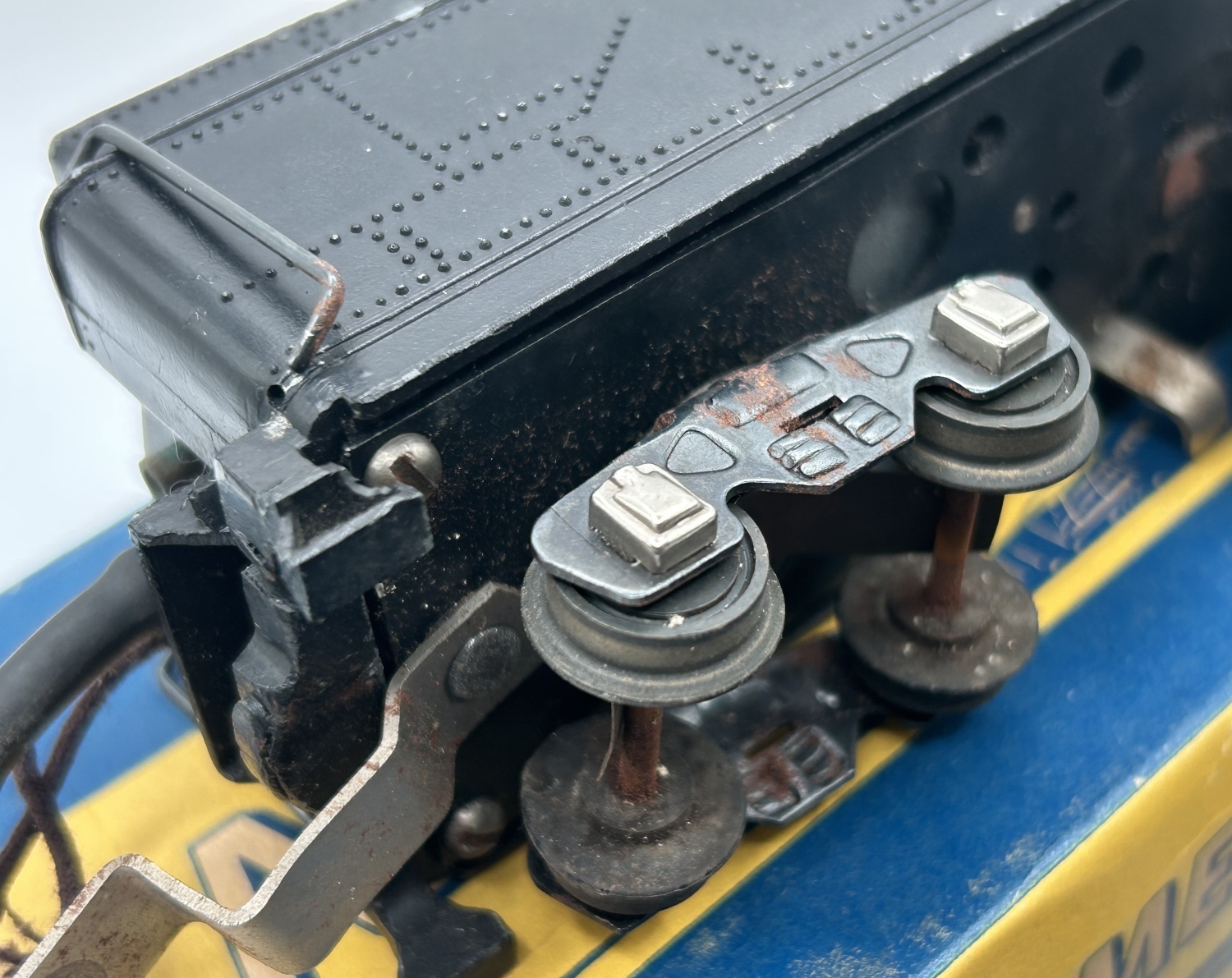 Scale flange on tender wheels |
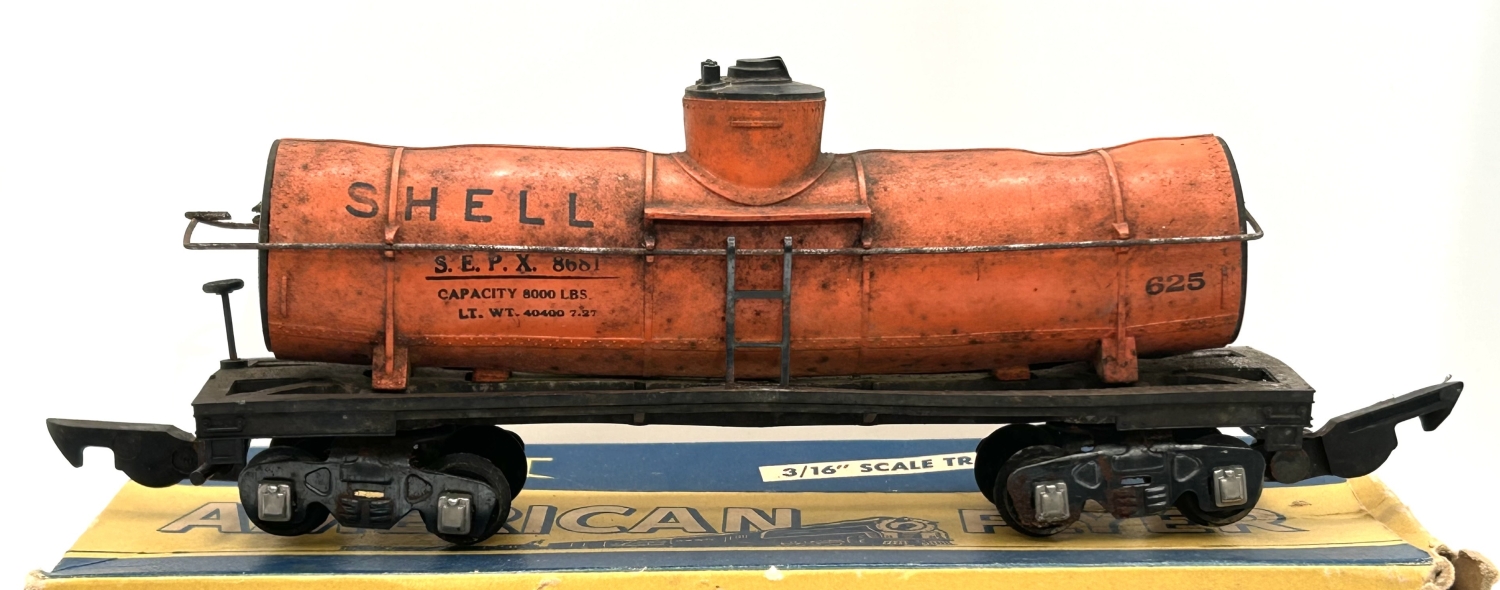 Shell tank car with scale Flanges |
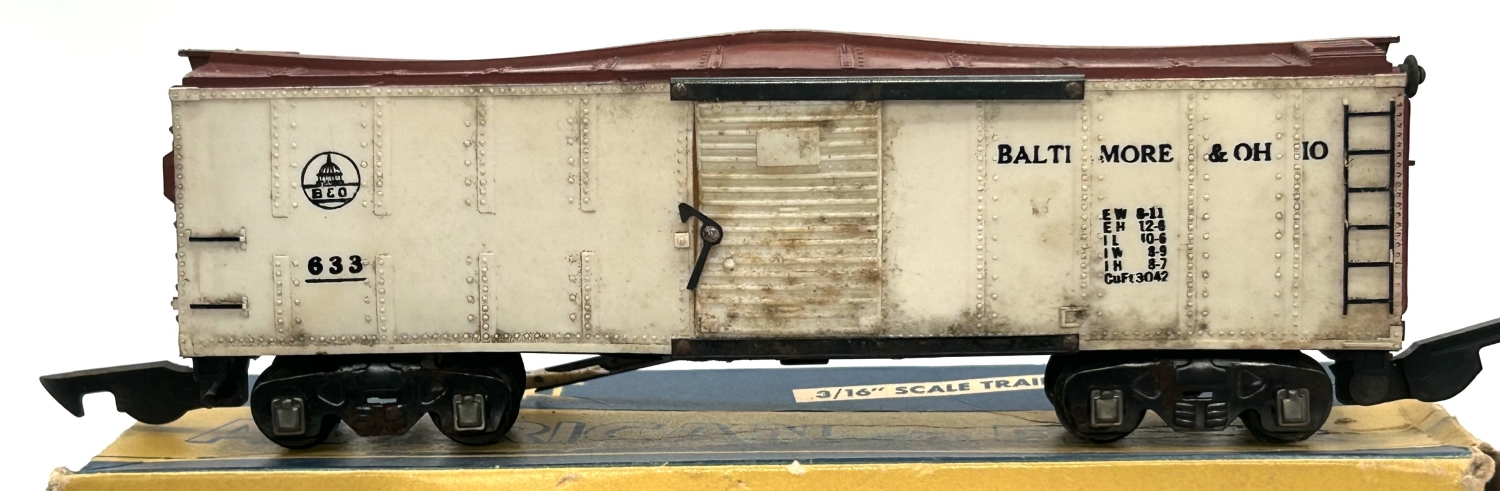 B & O boxcar with scale Flanges |
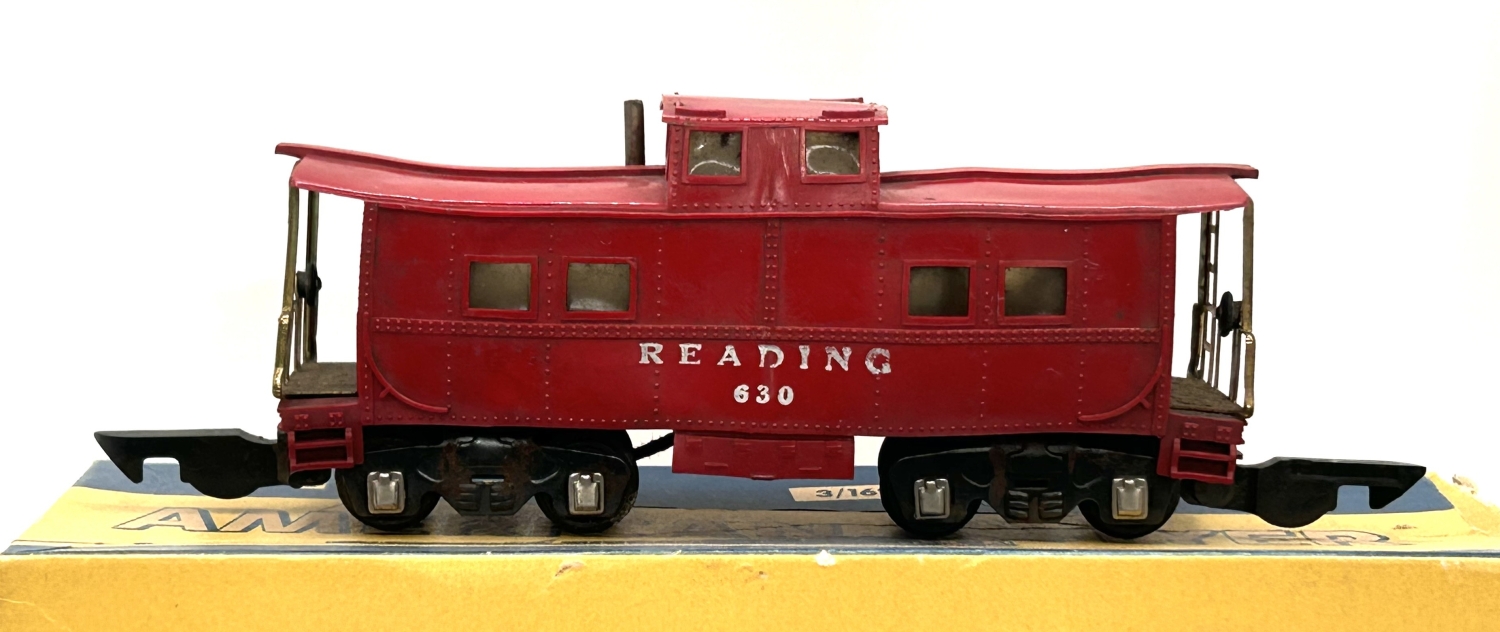 Reading caboose with scale Flanges |
 Shell tank car with scale Flanges - close-up |
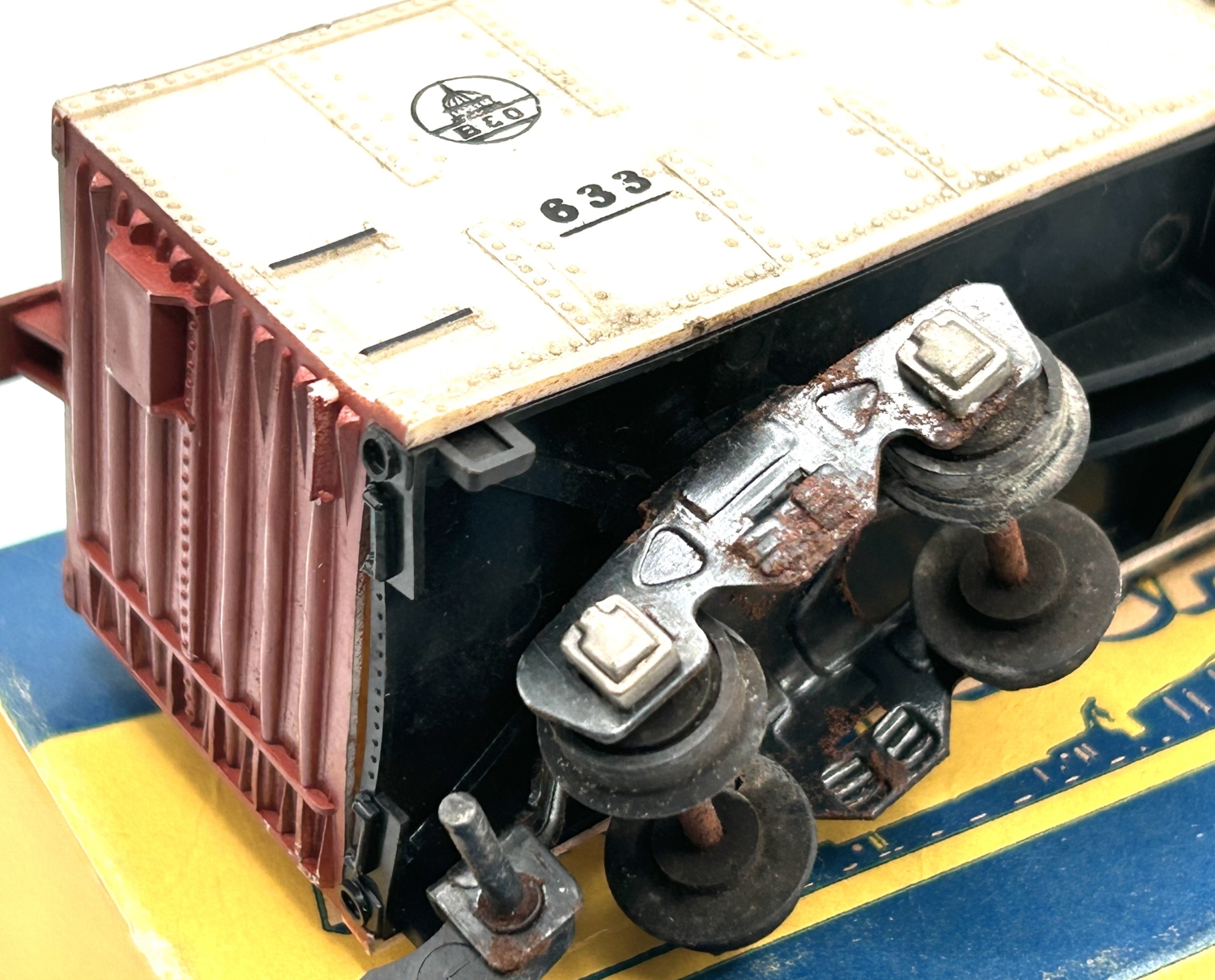 B & O boxcar with scale Flanges - close-up |
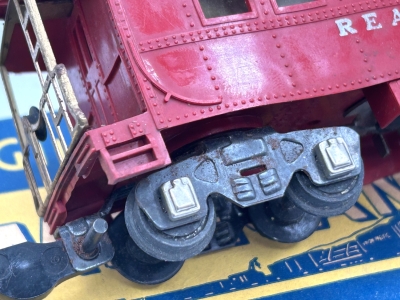 Reading caboose with scale Flanges - close-up |