 Photo Courtesy of Leonard Williams & Gary Baloun |
|
Photo Courtesy of Leonard Williams & Gary Baloun |
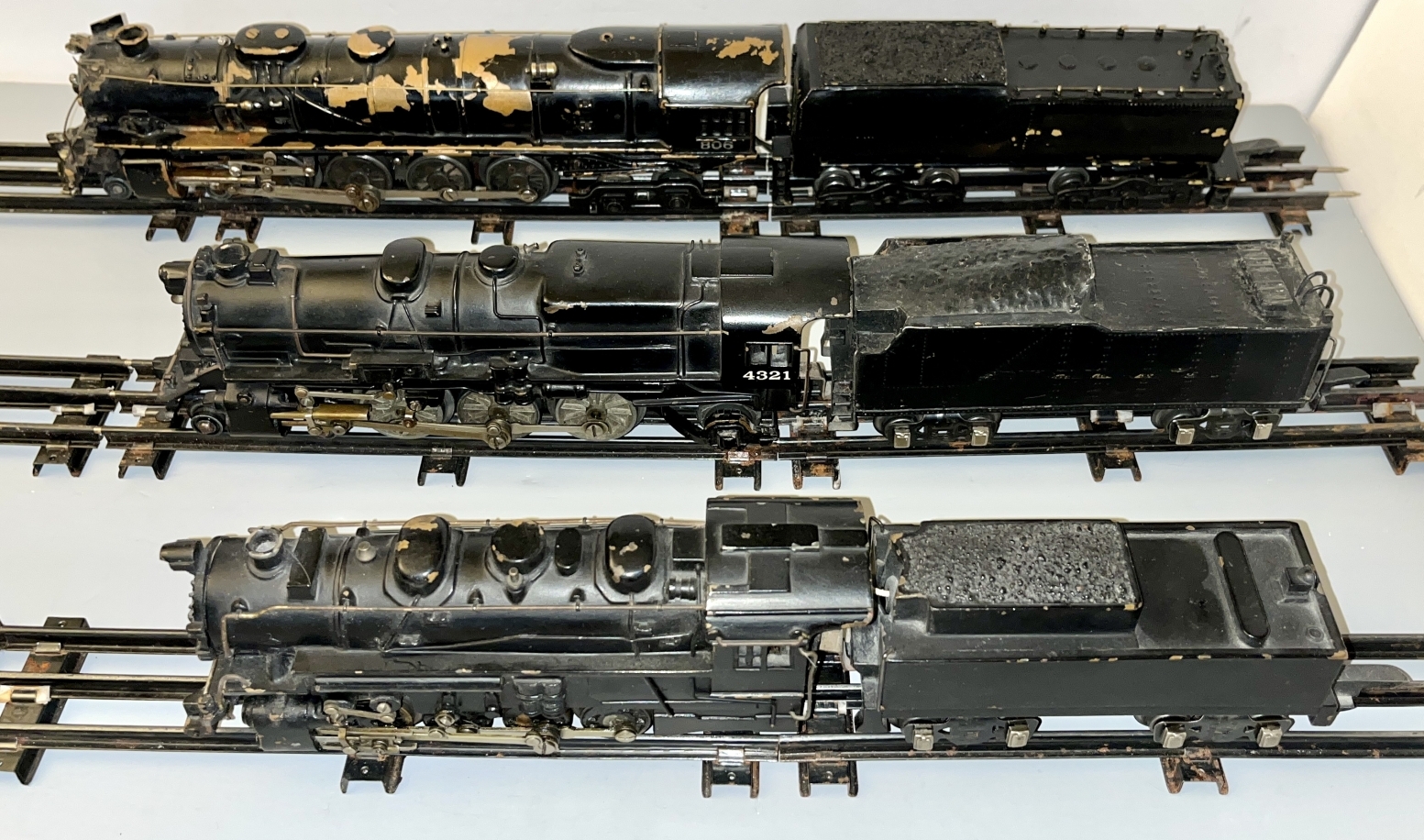
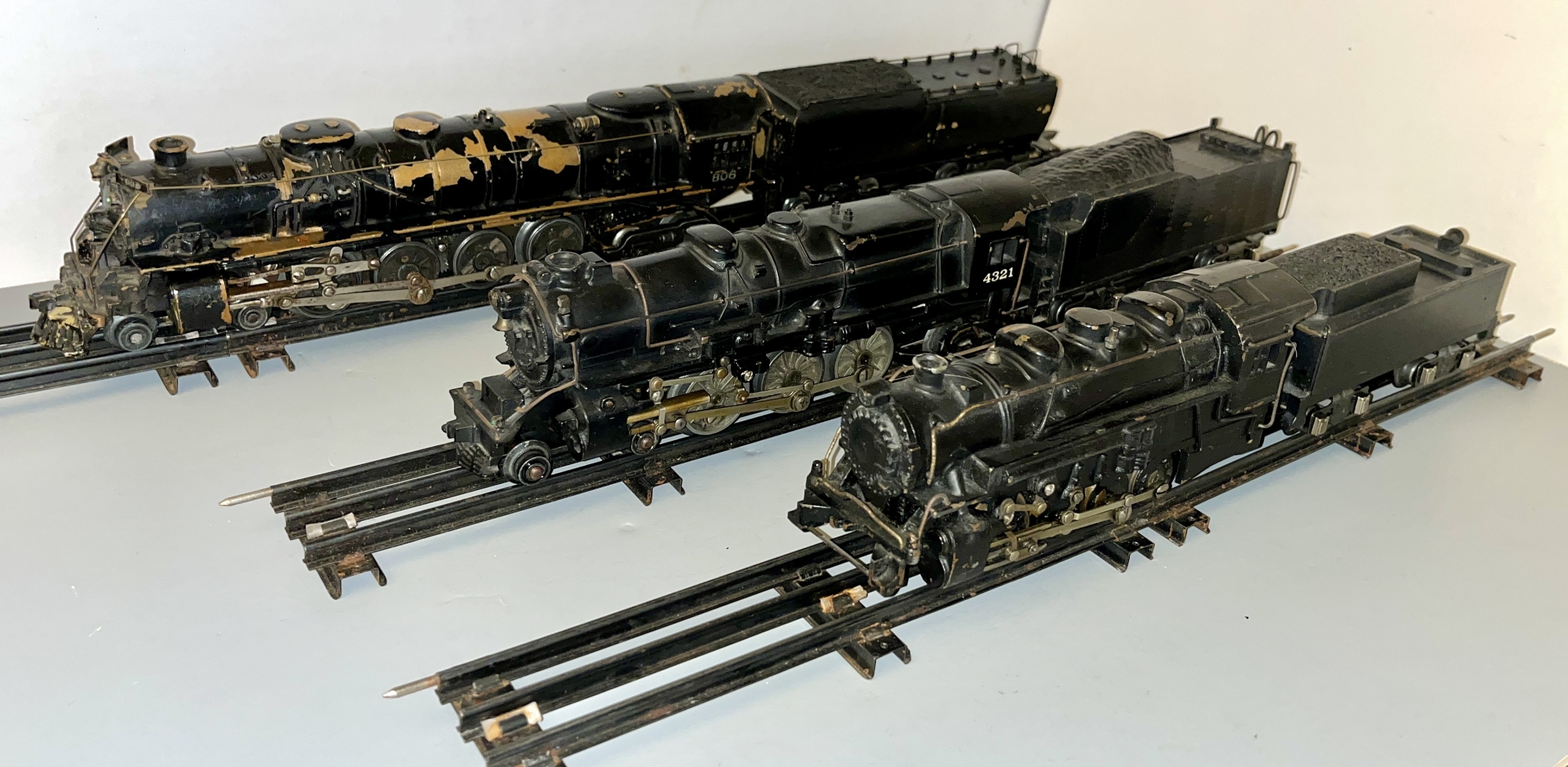
These prototype models are where 3/16 scale all began for American Flyer. Unlike many of the production models, which suffered from metal rot, all of these still run well due in large measure to the fact that they were constructed of brass. You can see these three in action in 3 excellent YouTube videos produced by Leonard Williams. Leonard explains the part these locomotives played in toy train history and provides insights into the development of S Gauge. He also explains the sets in which these locomotives were featured. You can view all the videos in full frame at the links below. While Gilbert eventually produced 6 different 3/16 scale locomotive styles designed to run on O gauge track, these prototypes, as well as the prototype of the 4-4-2 Atlantic which is preserved at the Toy Train Museum in Ronks, Pennsylvania, are the only ones whose whereabouts are known. The prototypes of the 4-6-4 Hudson and the 4-6-2 Royal Blue have not been found.



This is where 3/16 scale began for American Flyer. This model was produced in 1939 and was introduced at the New York Worlds Fair of that year. While it does not appear that the models were operating at that event, they were displayed on massive and highly detailed scale dioramas. As of 1939, only the 4-8-4 Union Pacific and the 4-6-4 Hudson were available for display as the Pennsy K5 and the 0-8-0 Switcher had not yet been made. Looking at the photo of the HO models of that same year, you can see the HO Hudson that had been in production since 1938. To see photos of those dioramas from the Ray Mohrlang Collection, Click Here.
1940 marked a major engineering change from spur gear models to the worm drive that would become a trademark of American Flyer Trains. Worm gear versions of the Northern and Hudson were introduced in 1940, but the Pennsy K5 was the first Gilbert 3/16 scale locomotive to be offered only with a worm gear drive. The Gilbert HO trains would not make the transition to worm drive until after World War II.
Introduced in 1941, this locomotive was the last of these three prototypes produced by Gilbert. This prototype was a very innovative locomotive and big things were planned for it, but unfortunately they never made to the production locomotives. It was planned to have the deluxe feature of Remote Directional Control which had been used in the UP 4-8-4, the Hudson, and the K5 Pacific which had been introduced earlier, but it also added a ringing bell feature that would be triggered by a cam on the wheel. This cam would provide a ground to a bell mounted in the tender, but unfortunately, the bell simply wouldn't fit in the tender.
Photos Courtesy of Leonard Williams & Gary Baloun
Thanks to Leonard Williams
and Gary Baloun for making this page possible.